Municipal Recreation Fields


How to light your field.

Lighting your local parks and recreation ballfield can be a very rewarding experience.Proper selection of an architect / engineering firm,lighting levels (footcandles), lamp source,equipment and installer is vital to this process. Whether it is an aerial or ground level sport,proper illumination is critical for safety and playability.Listed below are some recommended illumination levels for different sports and class of play (please see page 3 for comprehensive class of play definitions). These levels are based on the Illuminating Engineering Society of North America (IESNA) "Recommended Practice for Sports and Recreation Area Lighting" RP-6-01 manual. You should also research any requirements by a particular sport sanctioning body for any other lighting level needs. Be sure to investigate whether environmental lighting issues need to be addressed either through local codes or by site evaluation.


Steps to follow

STEP 1

Determine the sport, class of play and foot candle / uniformity requirements listed below.

STEP 2

Select the optics. Be sure to research local municipal codes for spill/glare requirements to ensure you use the proper optics.

STEP 3

Select the lamp source and wattage. The lamp source for sports lighting venues is Metal Halide. For most sporting events, 1500W is the desired wattage since fewer fixtures are required. However, for outdoor tennis courts or indoor sporting events, 1000W may be a better choice. Lamp life for 1000W is 12,000 hours whereas 1500W is 3,000 hours.

STEP 4

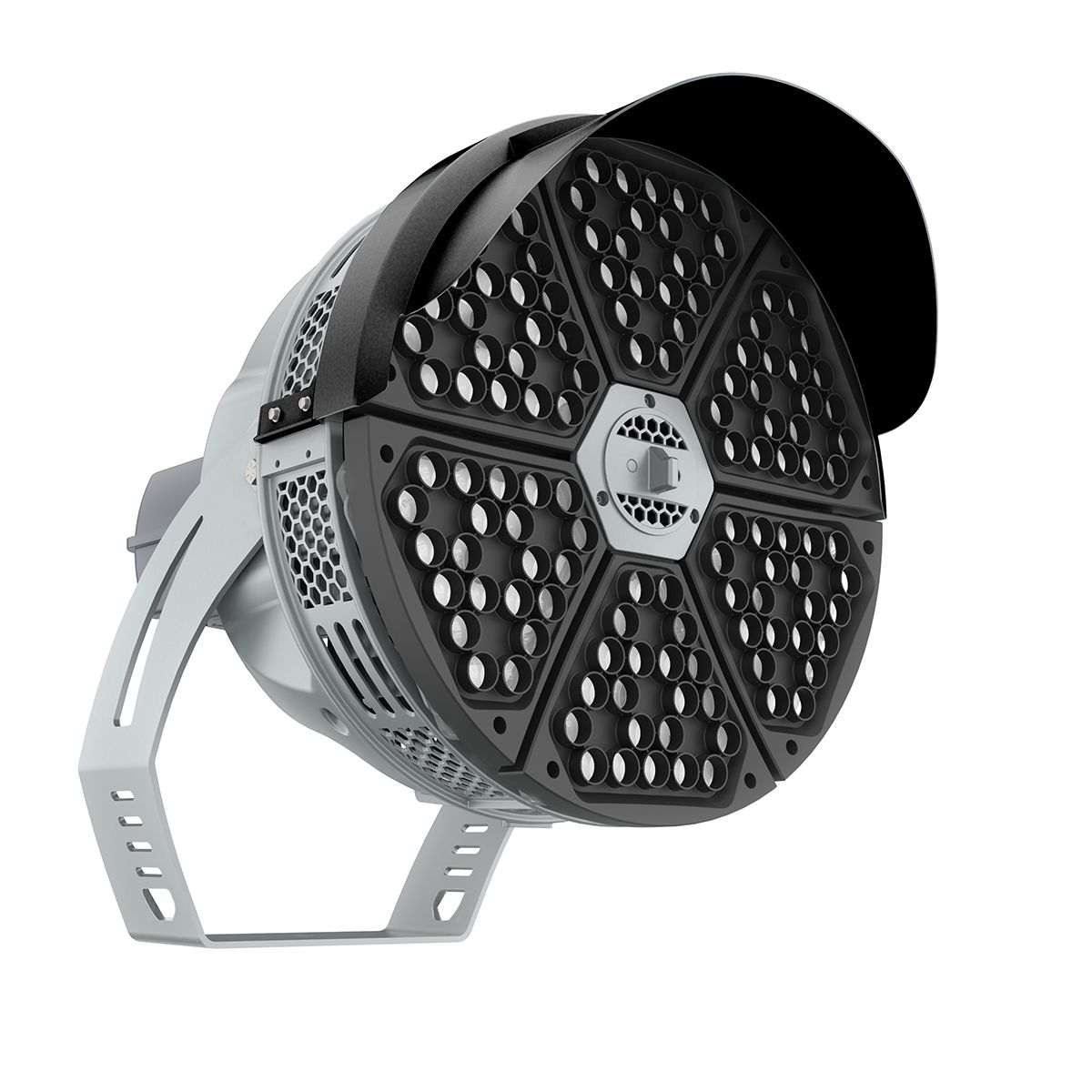
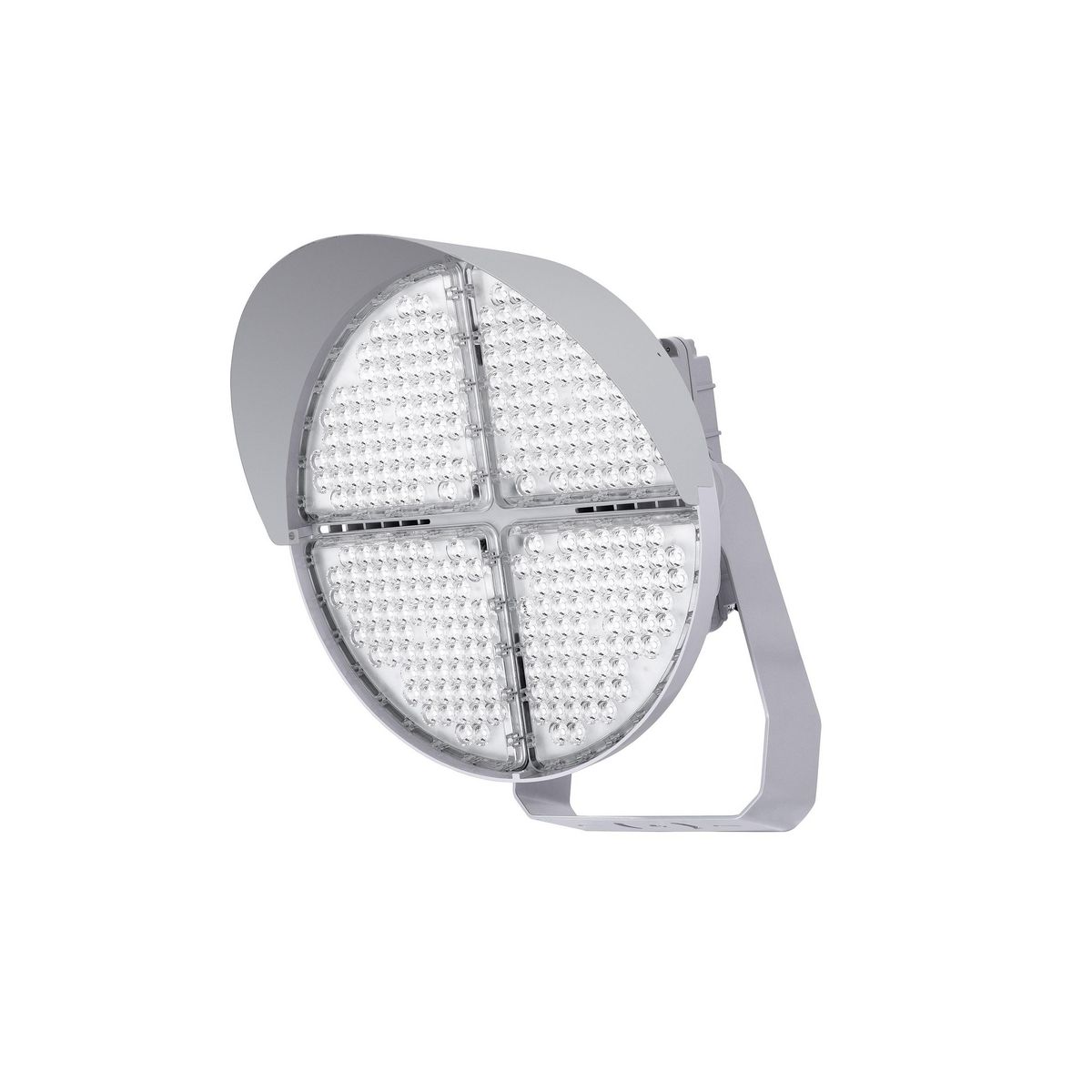
Select the system…. Remote ballast pre-wired and pre-aimed, integral ballasted pre-wired or retrofit/customer supplied poles. Remote systems usually are wired and pre-aimed and can save installation time and costs. Integral ballasted systems are pre-wired and the luminaires are field aimed for greater accuracy to the lighting design. Integral luminaires are mounted to existing poles or poles supplied by the end user. They will require aiming and wiring in the field. Retrofitting these luminaires on existing poles will save money simply by not adding the extra costs associated with poles.Note, it is the responsibility of the end user to ensure the poles will handle the total weights and EPA (effective projected areas) of the luminaires used.

STEP 5

Select the pole type. Galvanized steel poles are the most common in sports lighting applications with Concrete a very good option.

STEP 6

Contact a local architect / engineering firm or lighting manufacturer with experience writing product and performance specifications for sport fields.

Class I

Competition play before a large group (5000 or more spectators). However,for the purpose of this practice, illumination criteria for individual sports are limited to a spectator capacity of 10,000 or less. Lighting criteria for major stadiums and arenas require special design considerations such as vertical and horizontal illuminance values not covered by this Practice, which may be defined by individual sports and/or broadcasting organizations.

Class II

Competition play with facilities for up to 5,000 spectators.

Class III

Competition play with some spectator facilities

Class IV

Competition or recreational play only


Why Choose SLS?

With Sportsliter's advanced engineering, fewer fixtures are needed overall - which results in lower installation, maintenance and energy costs in the long run.

Choose Your Lighting Project

See how the Champions do it

Copyright © 2008 Hubbell Lighting, Inc. All rights reserved
Terms of Use | Site Map | Contact Webmaster